Zine or Short Audio Piece: Which Format Fits a Personal Essay?
Choose a zine or short audio piece for a personal essay by matching its pacing and audience attention to the way your story needs to unfold.
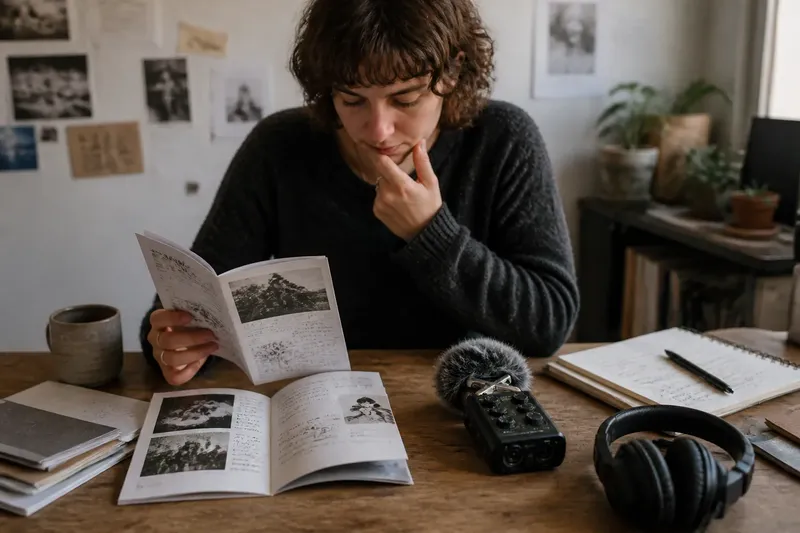
A zine or short audio piece can make the same personal essay feel either spacious or intimate. The right format depends on how readers or listeners should move through its ideas: at their own pace, or guided by a voice unfolding in time.
How does a zine shape a personal essay?
A zine lets a reader control the pace. They can pause over a sentence, jump between pages, or return to an image after the text has moved on. That freedom suits essays built around fragments, close observation or a subject that gains meaning through rereading.
Page design becomes part of the essay’s rhythm. A short line surrounded by white space can make a thought feel exposed; a dense page can create pressure. A photograph, hand-drawn mark or clipped scrap of text can add texture, but it should contribute to the essay’s meaning rather than serve as decoration.
Print also creates a physical encounter. A reader handles the object, notices its size and can keep it nearby. In a small-run zine, paper stock, binding and legibility all influence how the work feels. A folded sheet might make a compact, portable edition; a stapled booklet gives you more room to arrange sections and images.
How does a short audio piece guide attention?
Audio sets the pace for its audience. A listener hears each sentence in sequence, shaped by the speaker’s pauses, emphasis and tone. That control can bring a personal essay close to the ear, especially when its meaning depends on hesitation, humour or the sound of a particular voice.
Sound can also carry details that prose must describe. Room tone, footsteps, a kettle clicking off or a carefully chosen recording can place a listener in a scene. Use such sounds with purpose: an audio cue that adds atmosphere may deepen a moment, while one that merely illustrates every noun can distract from the writing.
The trade-off is that listeners cannot skim as easily as readers. If a sentence is difficult to follow on first hearing, its important detail may pass by. Clear phrasing, deliberate pauses and restrained music help the essay remain understandable without making the delivery feel flat.
Which format gives an essay more effective pacing?
Choose a zine when the essay’s pace should belong to the audience. Choose audio when the order and timing of each moment are central to its effect. Neither format is automatically slower or more thoughtful; each gives you different tools for shaping attention.
In print, pacing comes from page turns, paragraph length, spacing and sequence. A page break can withhold a detail, while a spread can place two seemingly separate moments in conversation. Readers can linger or skip, so the essay needs to remain legible even when someone pauses or returns to it.
In audio, pacing comes from delivery and editing. A pause can let a difficult admission settle; a cut can move quickly past familiar ground. Read the essay aloud before recording. If a sentence feels tangled in your mouth, revise it for the ear rather than relying on a listener to reread it.
How can you tell which format fits your essay?
Start with the experience you want to create, then consider what the work asks from its audience:
- Does the essay invite rereading? A zine makes it easy to revisit a sentence or compare passages on separate pages.
- Does the speaker’s voice carry meaning? Audio can preserve cadence, accent and shifts in tone that silent text cannot reproduce directly.
- Does the essay rely on visual relationships? A zine can put writing beside photographs, drawings or documents for the reader to connect.
- Does the story need a guided sequence? Audio can lead a listener through its turns without giving them the option to browse ahead.
- Will people encounter it in different settings? A printed copy suits readers who want an object to handle; audio suits listening through headphones or speakers.
- Can the idea survive without extra material? If a sound or image adds no meaning, do not choose a format just to accommodate it.
Say you have written about sorting through a relative’s recipe cards. If the essay depends on comparing handwriting, stains and marginal notes, an illustrated zine could let readers linger over those details. If its centre is your spoken recollection of a family kitchen, a short audio piece could make the voice and pauses more immediate. Those are format decisions, not reasons to add images or sounds that the essay does not need.
What should you ask before choosing a format?
Can a personal essay work in both print and audio?
Yes, if you revise it for each medium rather than simply copying the same text. A zine can use layout and images to create connections, while audio benefits from clear phrasing and intentional pauses.
How long should a short audio essay be?
Let the material decide how much time it needs rather than filling an arbitrary duration. Read the draft aloud at a natural pace, then listen for sections that repeat an idea or make a point hard to follow.
Does a zine need photographs or illustrations?
No; typography, spacing and the order of pages can shape a visual essay on their own. Add images when they contribute evidence, atmosphere or a meaningful contrast, not simply to fill blank space.
What if I am unsure which format to choose?
Make a rough print layout and a spoken reading using the same passage. Notice whether the passage gains force from page arrangement or from a voice in sequence, then let that distinction guide the larger piece.
How do you protect the essay’s attention?
Give each format a clear job. A zine should use its pages to create meaningful pauses, juxtapositions or returns; audio should use its spoken sequence, silence and sound with intention. Treat white space in print like a pause in conversation: useful when it gives a thought room, distracting when it has no purpose.
Then check the work in the form your audience will receive. Print a rough copy and turn the pages in order, or play an audio draft without reading along. If a key transition only makes sense when you explain it outside the work, revise the transition. For a personal essay, the best fit is the format that lets the audience attend to what matters without competing for that attention.
For a zine or short audio piece, the final choice can be simple: ask whether the essay needs the reader’s freedom to pause and return, or the listener’s company through a shaped sequence. That answer points towards the medium, while the details of the essay decide how to use it.