The One-Sentence Premise That Keeps a Short Film in Focus
A one-sentence premise for a short film helps you judge scenes, locations and props by whether they serve the film’s central change.
A one-sentence premise for a short film is a working tool, not a slogan: it tells you what change the film follows and gives you a quick test for what belongs. When a spare scene, location or prop threatens to widen the project, the premise helps you decide whether it earns its place or simply adds another thing to arrange.
That distinction matters especially when you are making a film with a small crew and limited kit. A premise cannot remove every constraint, but it can stop a modest story from quietly becoming several stories competing for the same few minutes.
What should the premise hold on to?
Start with the film’s central movement: who wants something, what is in the way, and what changes during the film. Those parts need not appear in a rigid formula, but they should point towards one dramatic line rather than a catalogue of themes or events.
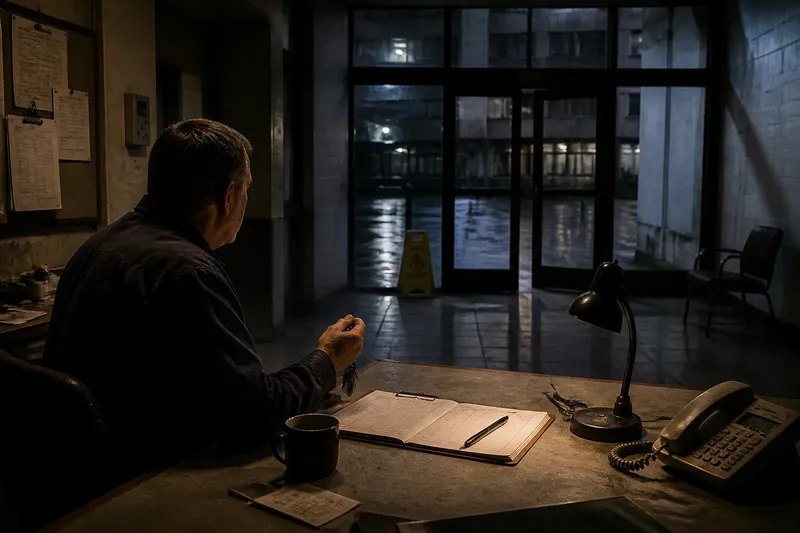
“A woman thinks about leaving her job” describes a subject and a feeling. “On the night she must hand over her keys, a caretaker tries to return one last lost item before the building closes” gives you a person, a task, a pressure and a boundary. The second version suggests scenes you can actually consider making.
Keep the premise narrow enough to hold in one breath. If it requires several clauses to explain the lead character’s history, the wider community, a subplot and a twist, you may be describing the whole imagined world rather than the short film. Choose the piece of that world where a visible decision can happen.
Specificity does not mean spelling out every plot beat. A useful premise leaves room for discovery in performance, sound and framing while still naming the question that gives those choices direction. It is more like a label on a storage box than a full inventory: brief, but clear enough to guide where things go.
How does the scope test work?
When considering a scene or element, ask: “Does this help the central character pursue the premise’s task, meet its obstacle or register its change?” If the answer is yes, look at how it contributes. If the answer is no, ask whether it serves a distinct purpose the premise has overlooked. If it does neither, set it aside for now.
This is a scope test, not a ban on atmosphere or ambiguity. A quiet shot of an empty corridor may matter if the film is about a caretaker facing the building’s last night. It may be an attractive detour if the story is really about a different decision and the corridor has no bearing on it.
Use the test at several scales:
- Scene: Does something shift in the character’s effort, obstacle or understanding?
- Location: Does the place create a useful pressure or make the action possible?
- Prop: Does the object trigger a decision, carry necessary information or alter what can happen?
- Character: Does this person affect the central action, or can their function be combined with someone already present?
- Shot: Does the image provide information, feeling or contrast that the surrounding images do not already provide?
The answers need not be mechanically tidy. A moment can deepen a character without advancing the task in a literal way. The point is to name that contribution rather than keeping a moment because it is charming, expensive to arrange or already written.
What does the premise change before filming?
It can make a small production more coherent by turning broad wishes into concrete choices. “Make the film feel lonely” is difficult to act on by itself. If the premise puts one person on duty in a closed building, loneliness can emerge through an unanswered intercom, a chair left facing a locked door or a sound that continues after the character leaves the room.
Those choices are not interchangeable decorations. Each should support the same dramatic line. If the film’s focus is returning one lost item, the item’s identity, the person who may claim it and the deadline for handing over the keys can all shape action. A second mystery about the building’s past might be intriguing, but it asks the audience to follow another line of attention.
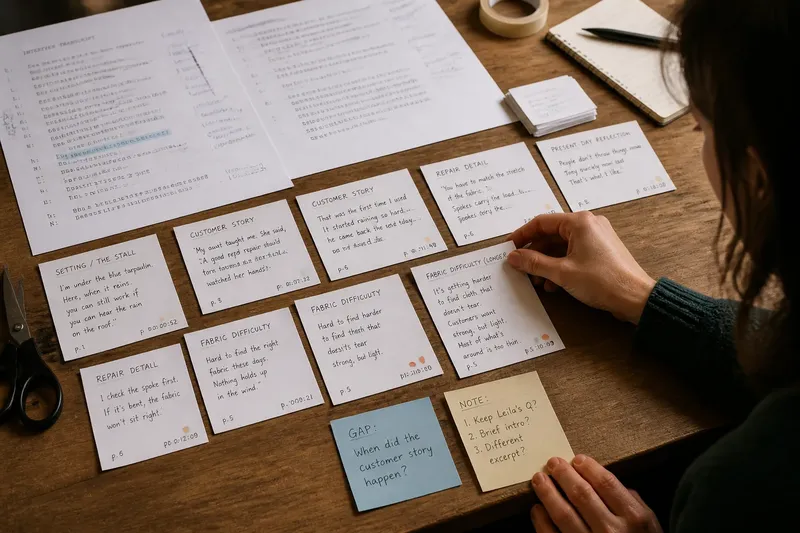
Say you have written a scene in which the caretaker finds a box of old photographs. The scene is moving, but it does not affect the attempt to return the lost item. You could remove it, or make one photograph identify the owner and bring the caretaker to a decision. The expected visible result is that the scene now changes what the character does, rather than asking for a separate pause to explain another story.
Do not confuse relevance with exposition. A premise can guide you towards what the audience needs to see while leaving what it can infer unsaid. If the audience can understand that the building is closing from a sign being taken down and the caretaker’s final key handover, a speech about the closure may repeat information instead of sharpening the moment.
How can you keep the premise useful as the draft changes?
Write the sentence where you can see it while reviewing the script. For each scene, note the specific contribution it makes: it begins the task, blocks it, changes the character’s approach or reveals the consequence of a choice. If several scenes do the same job, consider whether one can carry it more clearly.
Then check whether the premise still describes the draft you have. A new ending can change the film’s central movement; a character added to solve a practical problem can quietly become a second lead. If the sentence no longer fits, revise the sentence or the scenes. Do not keep a premise that flatters the idea while the film has moved elsewhere.
Keep a short “not in this film” note beside it. This is not a graveyard for every good idea; it is a reminder that a compelling idea may belong to a different piece. Write down the separate story thread, visual motif or character you are setting aside, so the cut feels deliberate rather than like a judgement that the material has no value.
Also distinguish a genuine need from a production complication disguised as story. If a scene only works with a crowd, a moving vehicle or a new location, ask what dramatic information that element provides. A smaller, more direct version may do the same job while keeping the film’s focus intact.
Which questions help sharpen a short-film premise?
Does a short-film premise need to explain the ending?
No. It should describe the film’s central movement clearly enough to guide decisions, but it need not reveal every beat or the final image. If the ending changes what the story is about, though, the premise should leave room for that change.
Can a premise focus on a mood rather than a task?
A mood can be the film’s texture, but it is harder to use as a scope test on its own. Pair it with an observable situation or decision so you can tell whether a scene develops the intended feeling or merely repeats it.
What if two stories seem equally important?
Ask which story produces the character’s decisive change and which can be understood through the other. If each needs its own setup, turning point and ending, you may have material for two shorts rather than one crowded short.
How often should the premise change during writing?
Revise it when the film’s central action genuinely shifts, not each time a new detail occurs to you. A sentence that changes with every scene idea cannot help you judge those ideas.
When should you trust the test and when should you bend it?
Trust it when a scene is present mainly because the crew can access an attractive location, because a prop looks good on camera or because a supporting character has a favourite speech. These are tempting reasons: they are concrete, while a film’s shape can feel abstract. Return to the character’s task and ask what the scene makes possible that the rest of the film cannot.
Bend the test when a deliberate detour creates a meaningful contrast, surprise or moment of stillness that the film needs. The useful question is not whether every scene advances the plot at full speed; it is whether the detour changes how the audience understands the central action. A pause can sharpen urgency, just as silence can make a sound more noticeable.
If you cannot explain what a scene contributes, you do not have to decide immediately. Mark it as uncertain, then read the draft with it removed. Notice whether the character’s choice becomes unclear, the emotional turn loses force or nothing important changes. That comparison gives you a more useful basis for revision than attachment to the scene alone.
A one-sentence premise for a short film works best when it stays close to what the audience can observe: an attempt, an obstacle and a change. Use it to make the next decision, not to defend every decision already made. When it helps you leave a good but unrelated idea on the page, it has done one of its most useful jobs.