A First Screening for a Finished Short: Plan the Room, Not the Hype
Plan a first screening for a finished short with a fitting room, clear expectations and a thoughtful conversation that gives viewers space to respond.
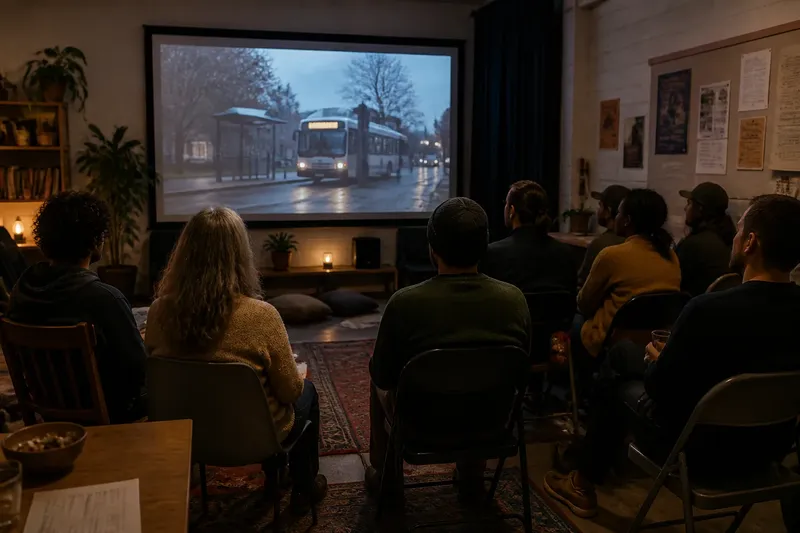
A first screening for a finished short works best when the room suits the film and the audience knows what kind of evening they are walking into. You do not need a launch campaign; you need a reliable way to show the work, a comfortable place to watch it and a conversation that does not turn into a defence of every editing choice.
Think of the screening less like a stage and more like a table set for guests: the arrangement should help people settle in and pay attention. A week is enough to make the basic decisions, check the venue and prepare a simple discussion. Keep the gathering modest, and let the film carry the weight.
What should the room do for the film?
Start with the viewing conditions, not the venue’s reputation. A quiet community room, a studio after hours or a friend’s living room may all work if the screen is visible from every seat and the sound is clear without being harsh. Choose a place where people can arrive without feeling they have wandered into a private workspace or a formal event they are not dressed for.
Consider the film’s shape. A dialogue-heavy short needs intelligible voices and a room without competing noise. A work built around shadow or fine visual detail needs controllable light and a screen that does not wash out when someone opens the door. If the film relies on silence, ask whether heating, ventilation or street sounds will intrude. You are not seeking a perfect theatre; you are removing distractions that would make the work harder to follow.
Look at the practical arrangement in person if you can. Check that seats face the screen, that nobody has to crane around a pillar, and that the entrance does not cut through the viewing area. A compact room can feel attentive, while a large room with scattered chairs can make a small audience feel oddly exposed. Choose a capacity that leaves some breathing space without making the gathering look empty.
How do you choose a setting and set expectations?
Match the setting to the people you want to invite and the sort of response you hope to hear. A familiar studio can make an informal conversation easier; a library meeting room may feel more neutral for a mixed group. If the film contains intense material, a private invitation lets you explain its tone before people commit. A public listing may bring unfamiliar viewers, so describe the screening plainly and avoid selling it as a polished premiere if the gathering is really a small first look.
Be explicit about the format. Tell guests whether the film will be followed by a discussion, whether the conversation is optional and whether they can leave afterwards without staying for refreshments. Give the running time if useful, and note any relevant content that a viewer might want to know before arriving. Say whether the event is seated, whether the venue is accessible, and how to ask about access needs. Keep the invitation warm but factual; inflated language can make an intimate screening feel like a performance of success rather than a chance to watch closely.
Imagine you have made a quiet film about a bus route and invited a dozen people to a neighbourhood arts room. You tell them it is a short screening followed by an optional conversation, mention that the film includes a brief scene of road danger, and explain that the room has step-free entry. They arrive knowing what to expect, and anyone who prefers to head home after the credits can do so without awkwardness.
What should happen during the week before?
Use the week to settle decisions in a sensible order. The venue and the playback method affect everything else, so confirm those before sending a final invitation. Keep a small note of who is responsible for each practical task; even a one-person event benefits from writing down what can otherwise be forgotten.
- About a week out: Confirm the room, access arrangements, start time and who can open the space. Ask about the available screen, speakers, seating and any rules for food or drink.
- Several days out: Send or update the invitation with the film’s length, the evening’s shape, directions and a contact for access questions. Make it clear whether guests need to reply.
- Before the event: Check the playback file on the device you plan to use, along with the connection, sound output and any subtitles. Keep a second copy on a separate device or drive if available.
- On the day: Arrive early enough to arrange chairs, test the image and sound, and make the entrance easy to understand. Put a simple sign outside the room if guests might not know where to go.
- As people arrive: Welcome them, point out where to sit and explain the basic plan without delivering a speech. Let late arrivals settle before starting if that will not disrupt the group.
If the room or equipment falls through, make the decision early and communicate it directly. A smaller alternative setting may be more useful than trying to preserve the original scale at any cost. If the film cannot be shown with intelligible sound or a visible image, postpone rather than asking viewers to strain through a compromised presentation.
How can you prepare for playback without turning it into a production?
Choose the simplest playback chain that the room supports. A laptop connected to a projector may be enough; a television can be clearer in a small space. Bring the correct adapter, a power lead and any subtitle file or captioned version you intend to show. Disable notifications and automatic sleep, close unrelated windows, and set the playback device so the film opens without exposing private files or a cluttered desktop.
Test from the seats, not only from beside the equipment. Listen for dialogue at the back of the room and check that subtitles remain legible from ordinary viewing positions. If a guest has asked for captions or another access arrangement, confirm that it is ready before people arrive. Follow the venue’s equipment guidance and the playback device’s instructions where they apply.
Decide in advance what you will do if playback fails. Keep the file in a second location and know how to switch to it, but do not improvise a complicated technical setup in front of the audience. If a fault cannot be fixed quickly, tell people what is happening and choose whether to pause, reschedule or continue with another part of the gathering.
How do you make room for a useful conversation?
After the credits, give the audience a moment before speaking. A short pause lets people shift from watching to responding. Then thank them for coming and ask one open question grounded in the film, such as what image or moment stayed with them. Leave space after asking; a quiet room is not necessarily a failed discussion.
Make clear that you are listening for reactions, not asking viewers to approve the work. If someone offers a broad judgement, invite a specific detail: what made a scene feel tense, distant or clear? You can ask what they understood about a character’s choice, but avoid steering them towards the interpretation you intended. Different viewers may notice different things, and that contrast can be useful without needing a verdict.
Keep the conversation bounded. A few focused prompts are usually easier to answer than a long question list, and not every guest needs to speak. If the film includes sensitive subject matter, do not press anyone to explain a personal response. Let people pass, and step in if one voice begins to dominate. You can finish by thanking the group and telling them whether you are seeking any particular kind of feedback later.
What questions should you answer before guests arrive?
Should you introduce the short before screening it?
A brief introduction can orient viewers: give the title, a little context and any practical note they need. Keep the explanation short enough that it does not instruct the audience what to think or spoil a moment the film is meant to reveal.
Should you invite only people who know the makers?
A familiar audience can make a first showing feel comfortable, while a few viewers outside the immediate circle may notice assumptions that friends overlook. Choose guests for the kind of response you want, and tell them plainly whether you are looking for relaxed reactions or focused comments.
What if nobody speaks after the film?
Allow a pause, then offer a more specific prompt about a scene, sound or question the film leaves open. If the room remains quiet, do not treat that as a demand to fill the time; guests can share thoughts privately afterwards or simply watch and go.
Should you record the conversation?
Ask everyone clearly before recording, explain what you would use the recording for and offer a way to contribute without being recorded. If permission is not clear, take brief notes instead, or let the discussion remain off the record.
How should you use what you hear afterwards?
Write down responses soon after the gathering, separating what several viewers independently noticed from a single person’s preference. Look for comments tied to specific moments: a confusing transition, a line that landed differently than expected, or a stretch where attention drifted. Those observations can help you decide what to revisit, but they do not automatically mean the film needs changing.
Thank guests the next day, especially anyone who offered considered feedback. If the short is finished and you are not seeking revisions, say so; people should not be left wondering whether their comments are meant to trigger another edit. If you do plan to make changes, explain what kind of feedback would still be useful and how you will share the next version.
A first screening for a finished short can be small and still feel complete. The useful measure is not how loudly the event announces itself, but whether guests could see and hear the work, understood the evening’s expectations and had a comfortable way to respond. Keep that standard in mind when choosing a room, and the film will have space to meet its audience on its own terms.